Srinagar – Heaven on earth

Lying on the banks of River Jhelum with deep and mesmerizing
valleys cascaded in sky scraping mountains and evergreen beauty,
Srinagar blends together the tints of nature, beauty, harmony and
romance.
With deep and mesmerising valleys
cascaded in sky-scraping mountains and evergreen beauty, this heaven on
Earth leaves you absolutely mesmerised. Right from Chashm-E-Shahi to the
exotic Shalimar garden, Srinagar offers bountiful of places to visit.
Surrounded by mountains for the adventurous lot to lakes for photoholics
to shopping markets for the spendthrifts, Srinagar does not disappoint
anyone.
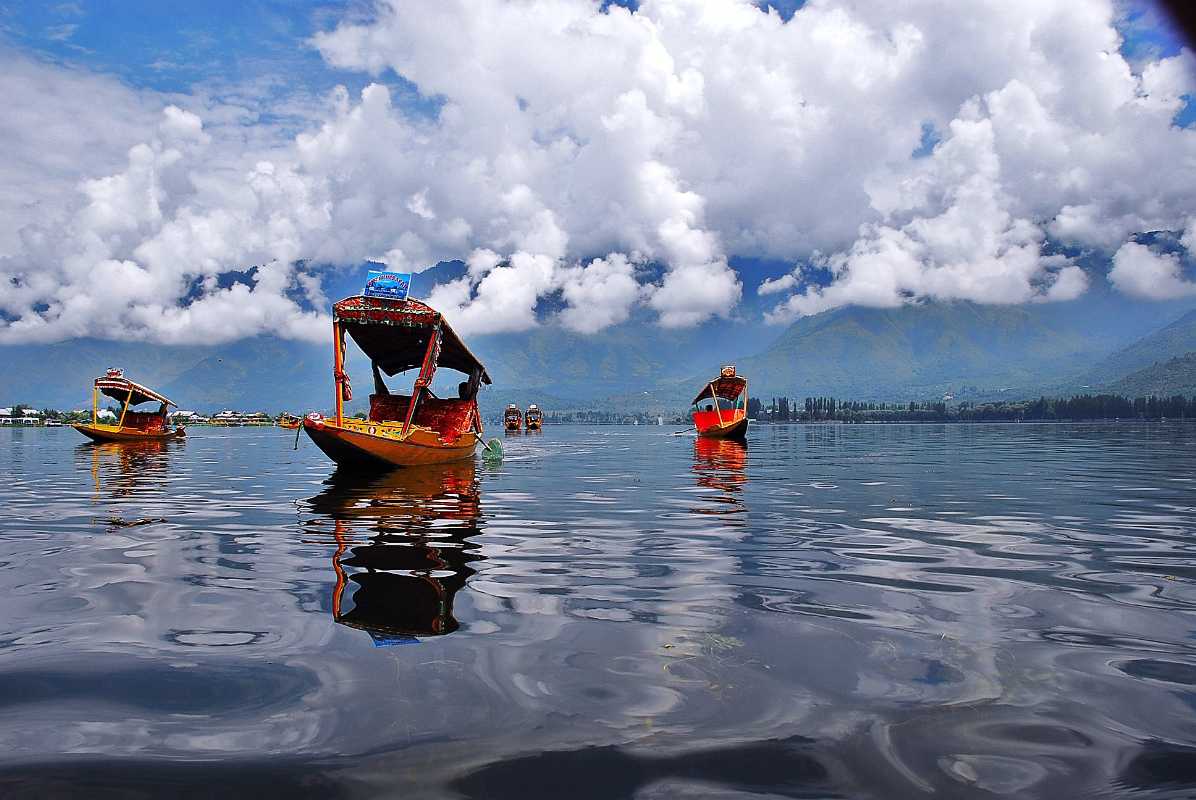
The Dal lake is among the most beautiful and most popular lakes in India and a Shikara ride there would be an unforgettable experience. Srinagar is also an important religious destination with the Hazratbal Mosque which enshrines 'Moi-e-Muqaddas' (the sacred hair) of the prophet Mohammed. Srinagar is also important as a base location to reach to various other areas of Jammu & Kashmir including Ladakh region, Kargil, Dras, Dachigam National Park and Baramulla.
The Dal lake is among the most beautiful and most popular lakes in India and a Shikara ride there would be an unforgettable experience. Srinagar is also an important religious destination with the Hazratbal Mosque which enshrines 'Moi-e-Muqaddas' (the sacred hair) of the prophet Mohammed. Srinagar is also important as a base location to reach to various other areas of Jammu & Kashmir including Ladakh region, Kargil, Dras, Dachigam National Park and Baramulla.
Dal Lake : The jewel of Srinagar, the Dal lake is
synonymous to a visit to Srinagar and almost a visual definition of the
town. Spread over 26 sq km, it is the most photogenic stretch of
paradise on earth and undoubtedly also the most sought after attraction.
Srinagar has always been a
pleasant place to visit in summer, therefore, making it one of the
favourite places the Mughals and the Britishers liked to go during
summer. One of its main attractions was the Dal Lake which was not left
unnoticed. The Mughals saw the potential in the Dal lake and surrounded
it with beautiful Mughal like-Gardens and pavilions and also built the
Shalimar and Nilshad Gardens exactly at a place where the beautiful
outstretched lake can be seen in all its glory.
The Britishers brought forward the concept of boat houses in the Dal Lake though it was rejected by the Dogra Maharaja of Kashmir. So on the whole, over time, the many differents rulers of Kashmir have brought so much change to the Dal Lake which has resulted in our benefit as we get to experience and cherish its beauty. The Dal lake consists of four main char chinars in the middle of the lake which is a means of its recognition.
The Britishers brought forward the concept of boat houses in the Dal Lake though it was rejected by the Dogra Maharaja of Kashmir. So on the whole, over time, the many differents rulers of Kashmir have brought so much change to the Dal Lake which has resulted in our benefit as we get to experience and cherish its beauty. The Dal lake consists of four main char chinars in the middle of the lake which is a means of its recognition.
Mughal Gardens : Mughal gardens are a group of gardens
built by the Mughals in the Persian architecture. This style was heavily
influenced by the Persian gardens particularly the Charbagh structure.
Significant use of rectilinear layouts is made within the walled
enclosures. Some of the typical features include pools, fountains and
canals inside the gardens.
Since the very beginning, the
construction of gardens was a beloved imperial pastime of the Mughal
Empire. Babur, the first Mughal conqueror-king, had gardens built in
Lahore and Dholpur. His son, Humayun, is known to have spent lots of
time at his father's gardens. Akbar built several gardens first in
Delhi, then in Agra. These tended to be riverfront gardens rather than
the fortress gardens which were built by his predecessors. Building
riverfront rather than fortress gardens influenced later Mughal garden
architecture considerably.
Since the very beginning, the construction of gardens was a beloved
imperial pastime of the Mughals. Babur, the first Mughal conqueror, had
gardens built in Lahore and Dholpur. His son Humayun, though not very
fond of beauty, is known to have spent a great deal of time at his
father's gardens. Akbar built several gardens first in Delhi, then in
Agra.These tended to be riverfront gardens rather than the
fortress gardens that his predecessors built. Building riverfront rather
than fortress gardens influenced later Mughal garden architecture
considerably. Jahangir did not build as much, but he helped to lay out
the famous Shalimar garden and was known for his great love for flowers.
His trips to Kashmir are believed to have begun a fashion for
naturalistic and abundant floral design.

Comments
Post a Comment